
Berlin Meteorologist Lands Major EU Cloud Grant
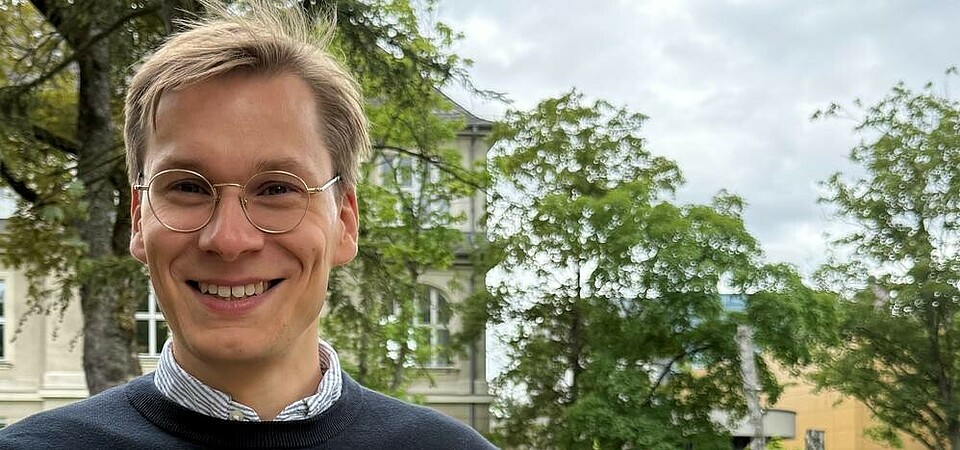
Fabian Hoffmann is researching clouds and their role in climate change. © Personal collection
Fabian Hoffmann, a meteorology professor at Freie Universität Berlin, has secured a major European Research Council (ERC) Synergy Grant to investigate how turbulence shapes cloud formation. The six-year project could transform our understanding of climate change.
According to a press release from Freie Universität Berlin, Hoffmann joined the university's Institute of Meteorology in October 2025. Now he's leading an international team that will receive €13.7 million to study stratocumulus clouds, which blanket one-fifth of Earth's surface but remain poorly understood in climate models.
The project, called "The Role of Turbulence in the Physics of Clouds (TurPhyCloud)," unites scientists from Germany, Sweden, and the Netherlands. Hoffmann will receive €2.5 million for his work in Berlin. The team brings together experimental physicists, theoretical physicists, and meteorologists to tackle a crucial question: how will clouds behave as our planet warms?
"Changes in Earth's cloud cover may amplify rather than mitigate global warming, but the magnitude of this is highly uncertain," the research team notes. Stratocumulus clouds are particularly important because they're the most common cloud type by area, yet predicting their response to climate change remains one of science's biggest challenges.
The researchers will conduct two intensive field campaigns at Sweden's Utö Atmospheric and Marine Research Station in the Baltic Sea. Using extremely high-resolution measurements, they'll capture cloud processes from kilometer scales down to micrometers. This data will feed into sophisticated statistical models that surpass current simulations in accuracy.
"Our goal is to develop a new simulation model that is guided and validated by the results of the field campaigns," Hoffmann explains. These simulations will then improve weather forecasts and climate projections worldwide.
Hoffmann previously led an Emmy Noether research group at Ludwig-Maximilians-Universität München and has won the German Meteorological Society's Young Scientist Award. His expertise in cloud physics, from rain formation to aerosol interactions, makes Berlin an increasingly important hub for climate science.