
Berlin's Universities Launch Shared Proteomics Facility
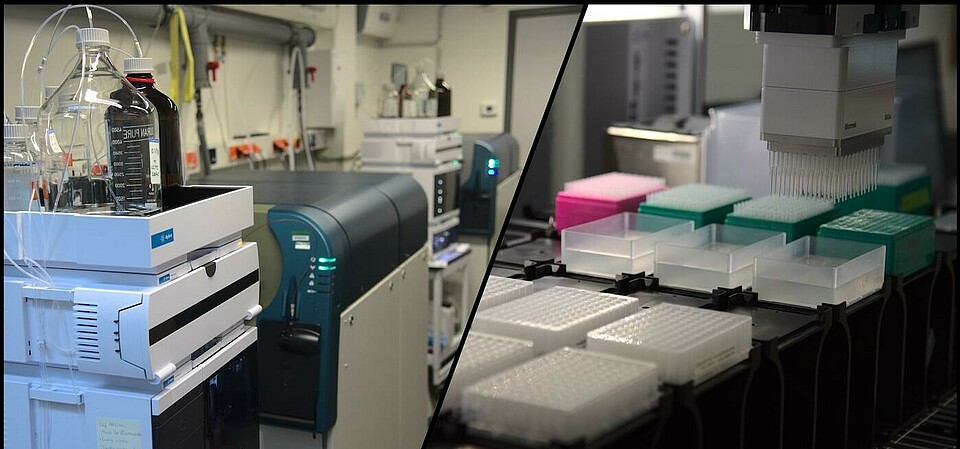
Berlin University Alliance is strengthening Berlin's cutting-edge research by establishing a joint Core Facility Proteomics. © Laboratory / Dr. Johannes Hart
Berlin's academic powerhouses are pooling their resources. The Berlin University Alliance—comprising Freie Universität Berlin, Humboldt-Universität zu Berlin, Technische Universität Berlin, and Charité - Universitätsmedizin Berlin—has announced the creation of a joint Core Facility Proteomics, set to launch in early 2026.
According to the Berlin University Alliance press release, the new facility will give researchers across all four institutions access to cutting-edge mass spectrometry technology for protein analysis. The €1 million investment comes from Germany's Excellence Strategy, funded by federal and state governments, with operating costs shared among the partner universities.
"With this joint platform, the BUA is strengthening Berlin's profile as an integrated knowledge and innovation hub," says Prof. Dr. Niels Helle-Meyer, spokesperson for the BUA's Steering Committee Sharing Resources. The facility aims to accelerate research, pool resources, and spark new collaborations across Berlin's research landscape.
The scientific impact could be significant. Prof. Markus Ralser from Charité, who will serve as scientific director, explains that the platform enables protein analysis at unprecedented speed and depth. This opens doors to new research areas ranging from systems biology to personalized medicine.
The facility addresses a growing need in biomedical research, where quantitative proteome analysis has become increasingly crucial. Berlin's NeuroCure and ImmunoPreCept clusters of excellence, which depend heavily on advanced proteomic methods, stand to benefit particularly from this shared infrastructure. Researchers in biochemistry, molecular biology, and medicine will also gain access to technology that might otherwise be out of reach.
The project serves as a pilot for the next phase of the Excellence Strategy, demonstrating how Berlin's universities are shifting toward jointly managed research resources in terms of use, operation, and financing.