
FU Berlin Physicist Wins €2M EU Grant for Quantum Research
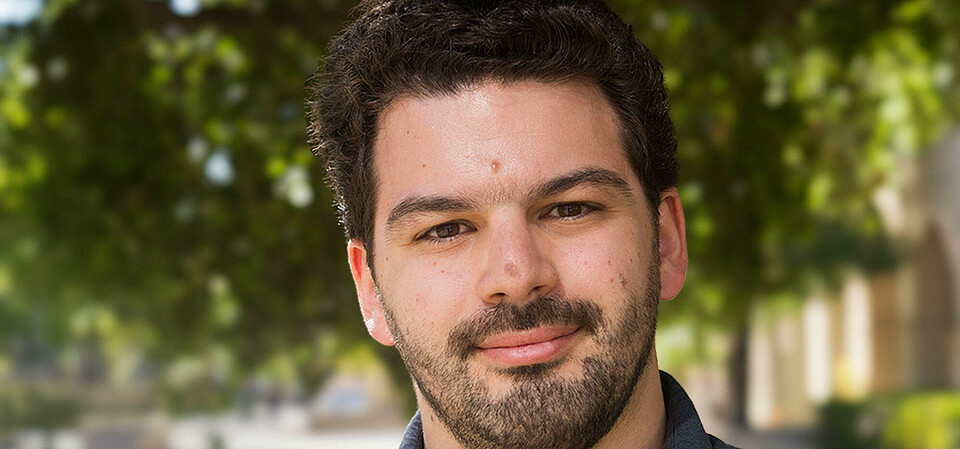
© Institute for Quantum Information and Matter (Caltech)
Dr. Philippe Faist, a quantum physicist at Freie Universität Berlin, has secured nearly two million euros in funding from the European Research Council. The ERC Consolidator Grant will support his five-year project exploring quantum complexity, a crucial concept for developing more powerful and reliable quantum computers.
According to a press release from FU Berlin, Faist's project, titled "Quantum Physics beyond the Low-Complexity Regime (QPhysComplex)," focuses on understanding physical phenomena in quantum states with complex forms of entanglement that current methods struggle to analyze. The senior researcher at the Dahlem Center for Complex Quantum Systems aims to push the boundaries of what's possible in quantum computing.
"Quantum complexity is a key concept for the future of quantum computing and the development of higher performing quantum computers, but it is also at the center of fundamental questions in modern physics," Faist explains. His work tackles two major challenges: determining the limits of engineering quantum complexity on actual hardware and developing new theoretical methods to understand many-body phenomena at scales beyond current low-complexity approaches.
The research has practical implications for quantum error correction, a critical technology for building stable quantum computers. Faist's team will investigate the minimal resources needed to process information encoded in quantum error-correcting codes, including the number of qubits required. They'll also explore connections between quantum complexity and quantum chaos, drawing on expertise in quantum thermodynamics.
Faist, who earned his PhD from ETH Zurich in 2016 and worked as a postdoctoral researcher at Caltech before joining FU Berlin, combines fundamental physics research with practical quantum computing applications. The project could lead to breakthrough designs in quantum computer architecture, potentially making these powerful machines more reliable and practically useful in the near future. The work may also help scientists describe previously elusive phases of quantum matter.